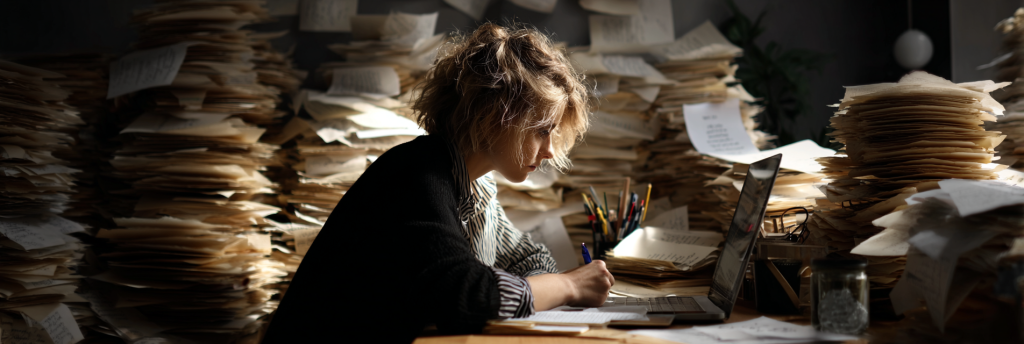
You know the feeling. You sit down to write, determined that this time the words will flow differently. And yet, every draft seems to land in the same place. The same rhythm. The same tired phrasing. It’s like changing the topic doesn’t change the voice.
When every draft sounds the same, it isn’t usually because you’re out of ideas. It’s because you’re stuck in a default voice — one that shows up automatically when you start typing. It’s the voice shaped by school assignments, professional emails, and all the ways we’ve learned to sound “acceptable.” Safe, polished, repeatable.
That default voice isn’t wrong. It’s useful. It gets things done. But it can’t carry the full weight of your creative intent. And if you don’t notice it, every draft risks flattening into that same, narrow range.
The way out isn’t to throw away your drafts; it’s to listen more closely to them. Ask: What does this voice sound like? How does it feel? What’s missing? That awareness opens a crack in the wall. Through it, you can invite in rhythm, tone, and phrasing that don’t come preloaded. You can shape a voice that feels more alive, more intentional.
Voicecraft exists because sameness is the default. Distinctness has to be chosen. The method gives you tools for noticing the patterns in your drafts and breaking them open, so that one piece of writing doesn’t just blur into the next.
Not every draft will sing. But when it does, it’s because the voice belongs to the work itself, not to the habits you’ve been repeating.