
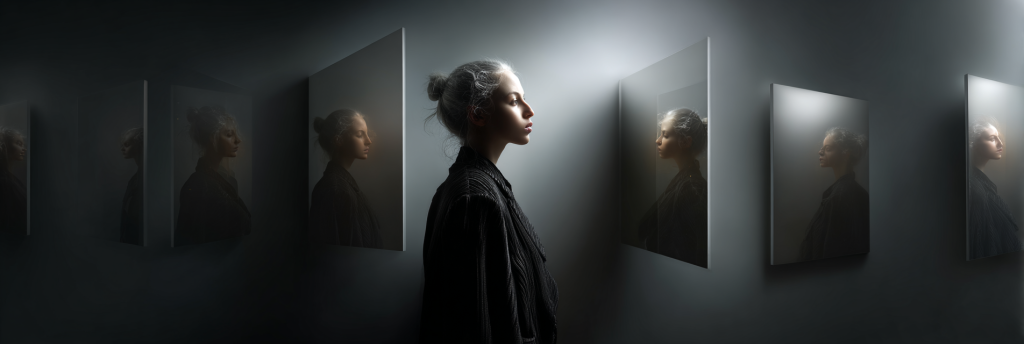
The Voice Isn’t the Style. It’s the Decision Pattern.
Most people think they have a writing voice because they prefer short sentences. Or long ones. Or poetic metaphors. Or

Most people think they have a writing voice because they prefer short sentences. Or long ones. Or poetic metaphors. Or

Voicecraft is not about sounding intelligent or polished. It is about staying present long enough to shape the work instead of inheriting it. A crafted voice introduces friction into AI collaboration, forcing you to think, choose, and remain cognitively engaged.

If your writing feels generic, it’s rarely because something is missing. More often, it’s because the voice hasn’t been claimed yet. Voice emerges through decisions, not techniques.
At a certain point, improving a voice stops being about skill and starts being about restraint. This is where most work stalls: not because the voice is unfinished, but because growth would require changing what already works.

Refinement makes something cleaner. Growth makes it larger, riskier, and harder to control. Confusing the two leads to beautiful stagnation: work that looks finished but never goes anywhere new.

Sometimes a voice doesn’t fail because it’s weak or unfinished, but because it’s being used in a space it was never designed for. Craft can be sound, tone can be right, and still the context quietly undermines everything.
You need to be logged in to view this content. Please Log In. Not a Member? Join Us

One of the quiet assumptions people make about voice is that a good one should work anywhere. If a voice

Voice is often treated as self-expression, but expression comes and goes. A voice takes shape through repetition. Through the choices you return to, the questions you keep open, and the posture that stays consistent as everything else shifts.
Once a voice has clear constraints, the question is no longer how to refine it, but whether it can hold its shape in use. Stability is tested through application, not adjustment.

Refining a voice can feel like care, but there is a point where refinement stops adding clarity and starts delaying use. Knowing when to stop is part of the craft.

Designing a voice often reveals more about your own patterns than you expect. The choices you make about tone, rhythm, and belief become a reflection of the habits you return to without thinking. A voice becomes a mirror that helps you see your writing with more clarity.