Look at an image for long enough, and you start to believe it’s self-explanatory. A street at dusk. A figure in motion. A window half-open. You tell yourself you know what it means. But the moment someone starts speaking over it, the image shifts. The same pixels take on a different weight, not because they changed, but because the voice did.
Two Versions of the Same Scene
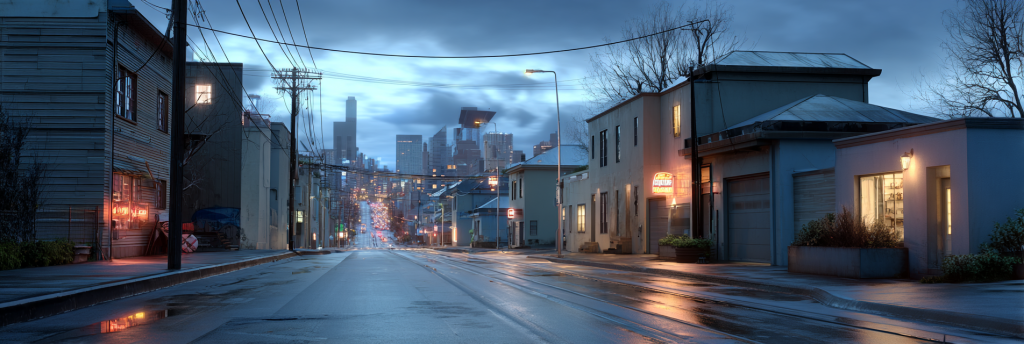
Imagine a quiet street at blue hour. The light is soft, the colors almost hushed. A narrator enters:
Version A:
“This is a street that remembers. Each doorway has held the same footsteps for decades, and even the air carries the patience of repetition.”
Version B:
“Here’s where the rush begins. Every window hides a story about to break open, every corner about to explode into movement. This is the last moment of stillness before it all ignites.”
The photograph didn’t change. But what you see has.
Why This Matters for Voice
Voice isn’t just decoration layered on top of content—it’s an active shaper of perception. The same object, scene, or idea will shift depending on the narrator’s tone, rhythm, and intent. This is why working with distinct voices matters: it multiplies your angles of vision.
A reflective voice slows your eye down, stretching the image into memory. An urgent voice accelerates it, pressing you toward anticipation. A playful voice reframes the scene as curiosity or irony. Each one directs attention, decides what is important, and invites you to notice in a particular way.
What to Practice
Next time you’re looking at an image—any image—try narrating it in three distinct voices:
- Grounded and reflective. Slow cadence, long sentences, patient observations.
- Restless and urgent. Short bursts, high energy, momentum-driven language.
- Playful and speculative. Light phrasing, rhetorical questions, unexpected comparisons.
You’ll find that the image itself starts to stretch and bend, as if it’s made of softer material than you thought. It’s not the pixels that changed—it’s the perspective.
The Larger Lesson
If voice can shift the meaning of an image this dramatically, think about what it does to your writing. Readers are not only hearing what you describe—they’re hearing how you decide to tell it. And that choice can be the difference between an image that is glanced at and forgotten, or one that stays, re-seen in the mind long after the page is closed.