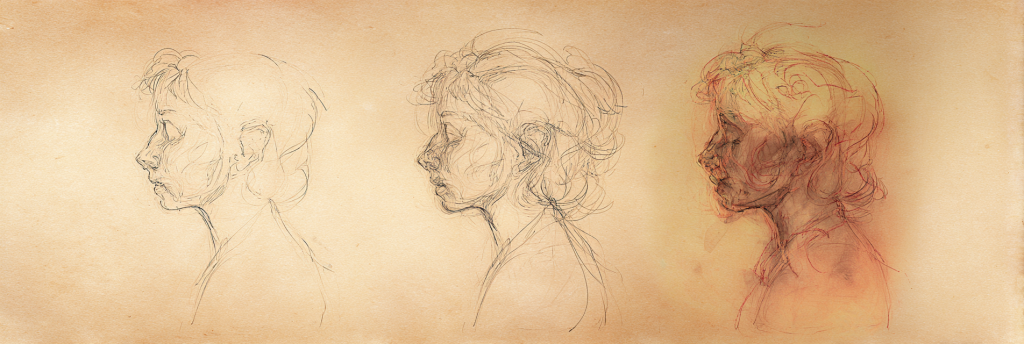
It’s okay if your voice feels flimsy at the beginning. Hollow. Slightly off. Like a pencil sketch waiting for ink.
That doesn’t mean the voice is wrong. It means it’s early.
Voicecraft is a method for layering. It starts with a sketch—just enough to hold shape—and deepens with use. With rhythm. With resistance. With a moment where the voice says something you didn’t expect.
If you’re working with AI, this early thinness might feel even sharper. The first few outputs can sound generic, or worse—like a parody of intention. But here’s the secret: a named voice gets richer through reuse.
You don’t have to get it perfect. You have to get it speaking.
Every return to the voice adds density. The way it starts sentences. What it avoids. How it interrupts.
Those quirks, those textures—they don’t arrive fully formed. They arrive through rhythm. Through return.
This is also where asking questions helps. When you step back and wonder, “What does this voice care about?” or “What would it never say?”—you start to shape it more deliberately.
The method sharpens when you make small changes, test responses, or challenge the voice to speak under pressure. What feels thin can become complex, just by paying attention and adjusting as you go.
So if your first sketch feels faint, keep going.
Add one more sentence that only that voice would say. Then another.
That’s how it thickens. That’s how it becomes real.