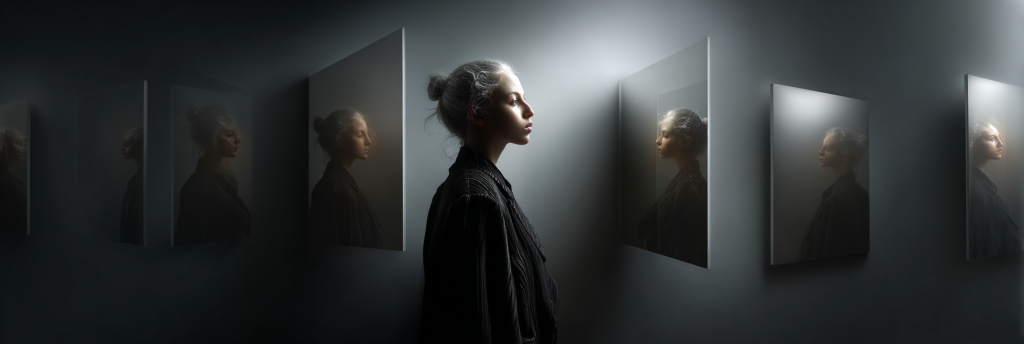
Writers are often told to “find your voice,” as if there’s one fixed version of it hiding somewhere inside you, waiting to be uncovered. The advice sounds simple, even comforting: once you find it, the work will flow. But here’s the truth—there is no single, permanent voice. And that’s not a problem. It’s the point.
Your voice shifts depending on where you are, who you’re talking to, and what the work demands. The way you write a story for yourself is not the same way you’d explain something to a friend, and that’s different again from how you’d teach a concept to a group. Each situation draws out a different version of you. Those aren’t inconsistencies. They’re extensions.
When you pressure yourself to locate the one authentic voice, you risk getting stuck. You start rejecting experiments because they don’t “sound like you.” You shrink instead of expand. Voicecraft works in the opposite direction: it gives you tools to notice, shape, and sustain multiple voices with intention. Instead of chasing one elusive “real” version, you can develop a gallery of voices, each tuned to the purpose you need.
Think of it like instruments. A violin isn’t more authentic than a trumpet; they simply play different roles. What matters is whether the instrument fits the piece you’re playing. In the same way, your job as a writer, or as someone working with AI, is not to lock down a single permanent voice, but to practice switching between them with fluency.
Your voice isn’t one thing. It’s a repertoire. The more you allow yourself to recognize that, the richer and more believable your work becomes.